








Hospitality Has Changed, but Guest Expectations Have Changed Faster. It once focused on friendly greetings, tidy rooms, and convenient locations. These things still matter, but they no longer stand alone. Today, guests evaluate hotels and accommodations by response speed, clear communication, and how easy the overall experience feels from start to finish.
A traveler browsing late at night wants to know if early check-in is possible. A family planning a trip wants clear answers about room size and breakfast options. A business guest wants fast help during check-in without waiting in line. These expectations exist before, during, and after the stay.
The AI Chatbot for Hotels and Accommodation has become essential because it delivers vital support to hospitality teams who need to manage multiple customer interactions while maintaining clear communication and delivering exceptional guest experiences.
Hotels and accommodation providers that understand this shift are not chasing trends. They are responding to how people actually travel today.
Why Hospitality Businesses Struggle With Communication at Scale
Hotels deal with communication pressure that most other businesses never face. Guests arrive from different time zones, speak different languages, and ask questions at all hours. Even a small property can receive hundreds of similar questions every week.
The challenges are familiar across the industry:
- Guests repeatedly ask about check-in times, parking, breakfast, and policies
- Messages arrive late at night or early morning when staff coverage is limited
- Peak seasons overload front desks and reservation teams
- Information is scattered across websites, emails, and booking platforms
Traditional systems were not designed for this level of constant interaction. Email is slow. Phone lines get busy. Front desks become bottlenecks during rush hours. Staff end up answering the same questions again and again instead of focusing on in-person service.
This is why the AI Chatbot for Hotels and Accommodation is becoming essential. It helps hospitality teams handle high volumes of communication without sacrificing clarity or guest satisfaction.
The Role of AI Chatbots in Modern Guest Journeys
To understand the real value, it helps to look at the guest journey as a whole. Communication does not start at check-in. It starts long before a booking is made and continues after checkout.
Before booking, guests want confidence. They ask about room types, amenities, location details, and policies. Quick and clear answers reduce hesitation and abandoned bookings.
During the booking stage, guests need reassurance. They want to understand pricing, cancellation terms, and special requests. A well-trained chatbot provides consistent answers without pressure.
During the stay, questions become practical. Guests ask about Wi-Fi, room service, housekeeping schedules, and local recommendations. Instead of calling the front desk, many prefer quick digital help.
After checkout, guests may ask for invoices, feedback options, or return visit details. This follow-up matters more than many hotels realize.
Across all these moments, the AI Chatbot for Hotel and Accommodation works quietly in the background. It supports guests while allowing staff to focus on service that truly needs a human touch.
Key Benefits for Hotels, Resorts, and Accommodation Providers
The impact of chatbots in hospitality is easier to see through results, not tools. When they are set up well, they improve daily workflows and shape how guests experience service.
Hotels
In hotels, quicker replies help reduce long lines at the front desk and nonstop phone calls. Guests get accurate answers at any time, while staff avoid repeating basic details and spend more time helping arrivals, assisting guests in person, and solving issues that need direct attention.
Resorts
Resorts benefit from steady support during busy stays filled with activities. An AI Chatbot for Hotels and Accommodations handles questions about dining options, schedules, policies, and experiences, helping teams manage peak hours while keeping communication clear, consistent, and dependable for every guest.
Accommodations
For serviced apartments and vacation rentals, chatbots offer clear guidance without the need for on-site staff. Guests receive timely help with check-in steps, house rules, and nearby information, while operators reduce stress and maintain a reliable experience that supports trust, reviews, and repeat stays.
Practical Use Cases Across Travel and Hospitality
Chatbots become truly valuable when they are used in real, everyday situations. In hospitality, those situations are easy to identify.
Common use cases include:
- Room availability and pricing enquiries
- Clear check-in and check-out instructions
- Cancellation and refund policy explanations
- Local attraction and dining recommendations
- Group booking and event-related questions
In these moments, the chatbot acts like a digital concierge. It does not guess. It answers based on approved information. For many guests, this feels easier than waiting on hold or searching through long web pages.
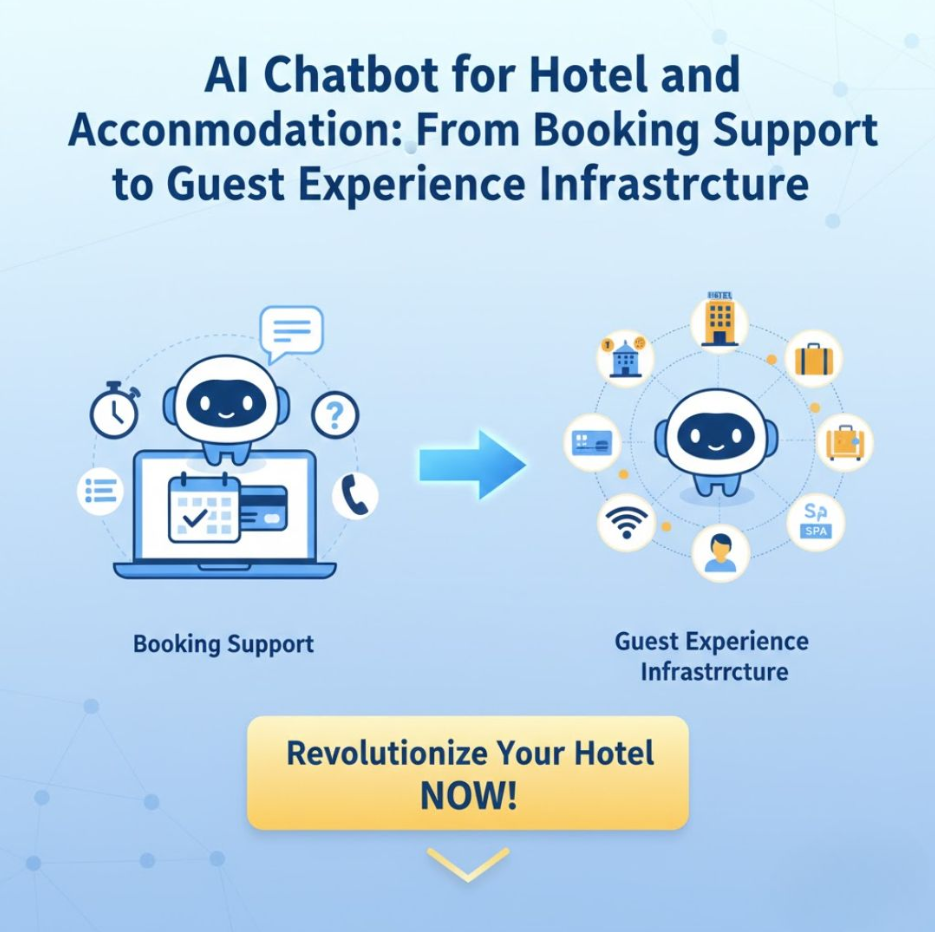
This is where the AI Chatbot for Hotel and Accommodation proves its role as part of the guest experience infrastructure, not just a messaging tool.
Why a Flexible AI Chatbot Builder Matters in Hospitality
Not all chatbots work well in hotels. Many fail because they are built as one-size tools that ignore how different properties operate.
A beach resort, a city hotel, and a serviced apartment all have different policies, services, and guest expectations. This is why the AI Chatbot Builder behind the system matters so much.
A flexible builder allows hotels to train chatbots using their own documents, such as policies, service guides, and FAQs. It allows updates when seasons change, services expand, or rules are revised. It respects that hospitality information is never static.
The custom AI Chatbot maker becomes the foundation. Without flexibility, automation turns into frustration. With flexibility, chatbots become reliable partners for staff and guests alike.
Guest Trust, Accuracy, and the Importance of Getting Answers Right
Hospitality runs on trust. A single wrong answer can create confusion, complaints, or even financial disputes. This is why chatbots in this industry carry real responsibility.
Guests rely on answers about pricing, cancellations, and services. If information is outdated or incorrect, trust erodes quickly. This is why knowledge-based systems matter more than clever replies.
A strong AI Chatbot Builder ensures responses come from verified documents, not assumptions. It allows monitoring, review, and continuous improvement. Teams can see where guests struggle and refine answers over time.
In this context, chatbots are not gimmicks. They are part of service delivery. Accuracy is not optional. It is central to guest confidence and brand reputation.
AI Chatbots Are Becoming a Standard Part of Hospitality Operations
Hospitality businesses are not adopting chatbots because they are trendy. They are adopting them because guests expect instant, accurate help at every stage of their journey. The AI Chatbot for Hotel and Accommodation has become a practical response to modern travel behavior. It supports staff, improves consistency, and meets guests where they already are.
Behind every effective system is a thoughtful AI Chatbot Builder that prioritizes flexibility, accuracy, and trust. Hotels and accommodation providers that invest early are not just saving time. They are building smoother, more dependable guest experiences. In the years ahead, chatbots will not replace hospitality. They will support it quietly, reliably, and at scale.