









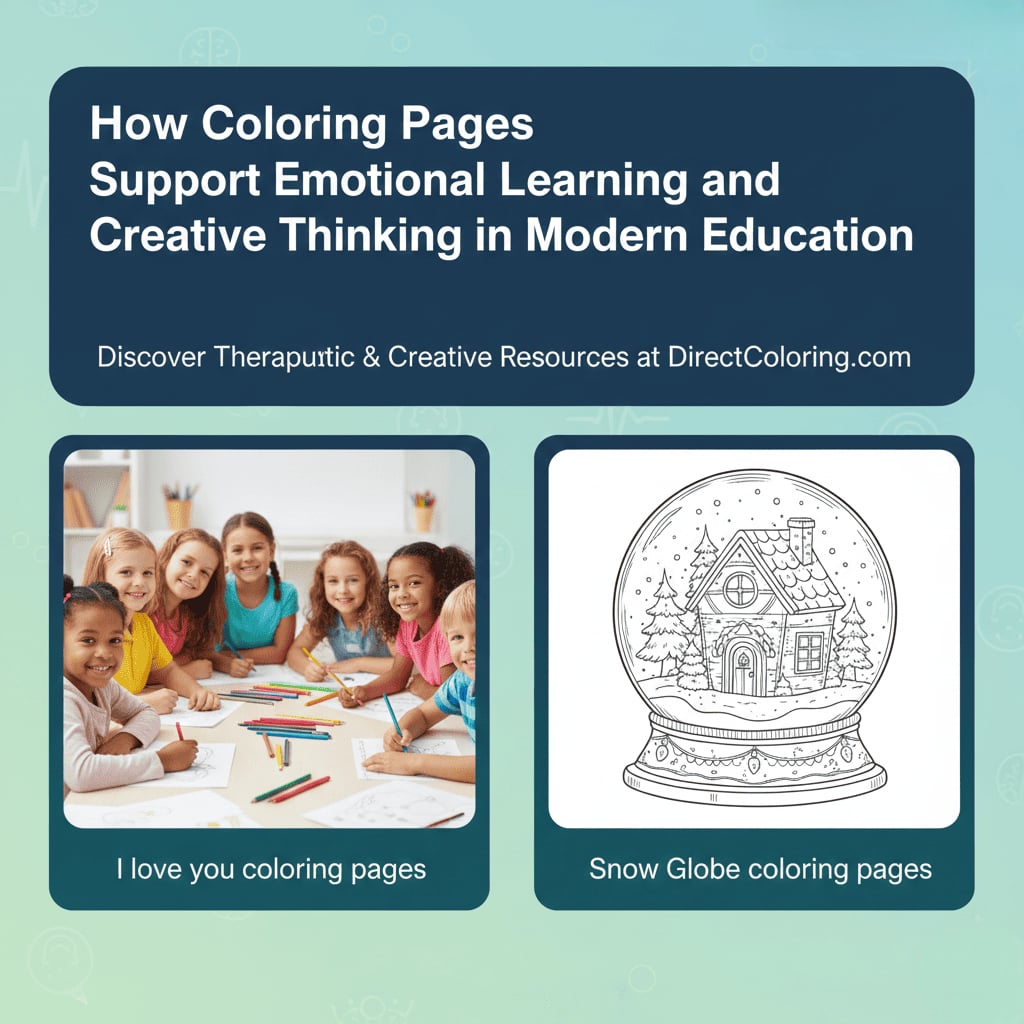
In today’s education landscape, learning is no longer defined solely by textbooks, tests, and traditional instruction. Educators and parents are increasingly recognizing the importance of emotional development, creativity, and human connection as essential components of a child’s growth. One surprisingly powerful tool that bridges these areas is coloring pages.
Often perceived as a simple pastime, coloring has evolved into a meaningful educational resource supporting emotional literacy, fine motor development, and creative expression across age groups. When thoughtfully designed, coloring pages become far more than art activities; they become pathways to learning that is personal, reflective, and engaging.
Coloring Pages as an Educational Resource
Research in early childhood education consistently shows that hands-on creative activities enhance cognitive development. Coloring pages allow learners to slow down, focus, and interact with ideas in a tangible way. Unlike passive screen-based content, coloring requires active participation, decision-making, and sustained attention.
From an educational perspective, coloring pages support:
- Fine motor skill development
- Visual-spatial awareness
- Emotional regulation
- Focus and task completion
These benefits apply not only to young children but also to older students who benefit from reflective, low-pressure creative work.
Emotional Learning Through Visual Expression
One of the most valuable yet often overlooked aspects of coloring pages is their role in social-emotional learning (SEL). Visual expression allows children to explore feelings that may be difficult to articulate verbally.
Pages themed around love, kindness, and connection-such as I love you coloring pages-offer children a safe and approachable way to understand emotions like affection, gratitude, and empathy. When children color images that symbolize care or relationships, they are often prompted to talk about who they care about, how they show love, and why emotional bonds matter.
Teachers frequently use such pages to:
- Introduce conversations about emotions
- Support classroom community-building
- Encourage respectful communication
- Reinforce positive social behavior
For parents, these activities create opportunities for meaningful dialogue at home, strengthening emotional bonds while supporting learning.
Creativity as a Foundation for Learning
Creativity is no longer considered an “extra” in education-it is a core skill for problem-solving, innovation, and critical thinking. Coloring pages nurture creativity in a structured yet flexible way. Children are given a framework, but the choices they make within that framework are entirely their own.
This balance is especially valuable in educational settings, where students benefit from guidance without rigid constraints. Coloring pages encourage:
- Independent decision-making
- Experimentation with color and pattern
- Confidence in personal expression
Over time, these experiences help students become more comfortable expressing ideas-an essential skill across academic disciplines.
Seasonal and Concept-Based Learning Through Art
Another educational strength of coloring pages lies in their ability to support thematic and seasonal learning. Visual themes help abstract concepts feel concrete and memorable.
For example, Snow Globe coloring pages can be used to explore:
- Seasonal changes and winter weather
- Cultural traditions and holiday symbolism
- Storytelling and imaginative writing
- Visual observation and detail recognition
Teachers often pair these pages with reading assignments, science discussions, or creative writing prompts, allowing students to connect artistic expression with academic content.
Supporting Focus and Mindfulness in the Classroom
Modern classrooms face increasing challenges related to attention and overstimulation. Coloring pages provide a calming, structured activity that helps students reset mentally.
Educators report that coloring:
- Reduces classroom anxiety
- Improves focus after transitions
- Supports students with diverse learning needs
- Encourages quiet, independent work
This makes coloring pages particularly effective as:
- Warm-up activities
- Cool-down exercises after complex lessons
- Tools for inclusive participation
Rather than distracting from learning, coloring often enhances readiness to engage with more demanding tasks.
Benefits for Parents and Home Learning
Coloring pages also play an important role outside the classroom. For parents supporting learning at home, printable coloring activities offer a screen-free option that feels both educational and enjoyable.
At home, coloring pages:
- Encourage shared family time
- Support early learning skills
- Reinforce emotional communication
- Provide constructive downtime
Parents frequently find that coloring becomes a gateway activity-leading to conversations, storytelling, or creative play that extends beyond the page.
Inclusivity and Accessibility in Education
One of the greatest advantages of coloring pages is their accessibility. They require minimal materials, no advanced skills, and can be adapted for a wide range of ages and abilities.
From an equity standpoint, coloring pages:
- Are cost-effective educational tools
- Support learners with different learning styles
- Can be used in diverse cultural contexts
- Encourage participation without performance pressure
This inclusivity aligns strongly with modern educational goals centered on student well-being and engagement.
The Role of Coloring in Lifelong Learning
While coloring is often associated with young children, its educational value extends far beyond early childhood. Older students and even adults use coloring as a tool for reflection, stress reduction, and creative exploration.
In educational psychology, such activities are recognized for supporting:
- Emotional balance
- Cognitive flexibility
- Creative confidence
This reinforces the idea that learning is not limited to academic achievement-it is also about developing the whole person.
Conclusion
In an age where education is becoming increasingly complex, sometimes the most effective tools are also the simplest. Coloring pages offer a powerful blend of creativity, emotional learning, and cognitive development-supporting students, educators, and families alike.
Whether helping children express affection through themed activities or exploring seasonal concepts through imaginative visuals, coloring pages demonstrate that learning can be both meaningful and joyful. By integrating creativity into education, we create learning environments that are not only informative but also humane, engaging, and deeply connected to how children grow and understand the world.