







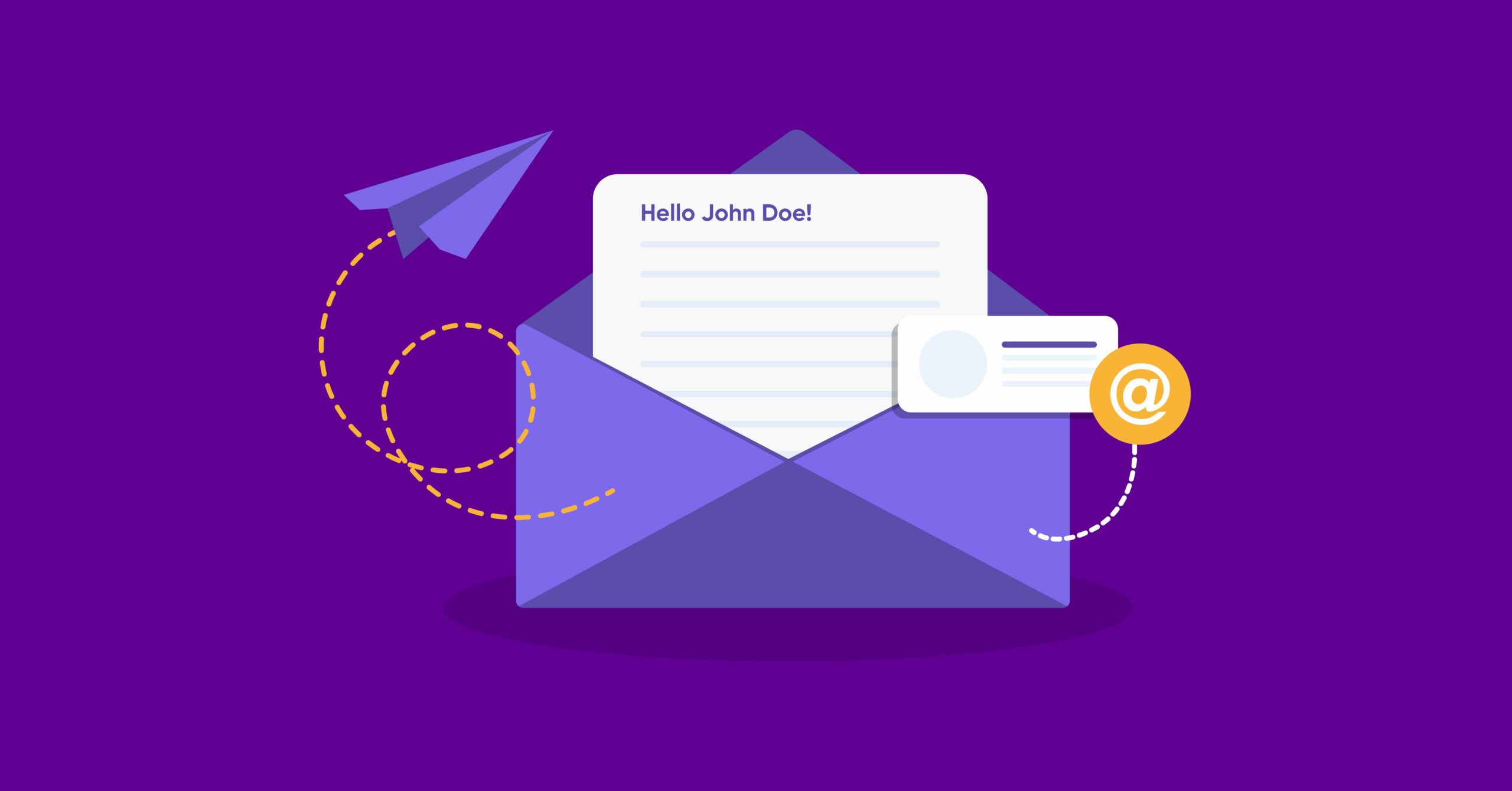
Despite the increasing prevalence of social media networks, email remains the primary means of communicating with customers. Customers continue to utilize email for updates, promotional offers, and transactional messages. This sustained usage creates a consistent engagement channel for retailers. Subscriber lists expand at a faster pace. Larger databases make relevance harder to sustain. Generic messaging leads to disengagement as scale increases. To achieve this, email personalization solutions offer the capability to create structured, relevant messaging for customers.
Retailers serving large subscriber lists must have systems in place that help deliver consistent messages while enabling retailers to maintain control of their messaging process. Retailers should not rely on manual email processes to manage their high-volume campaigns because they will not be as effective as automated solutions due to the potential for scalability challenges in the future.
Using email personalization tools to automate the messaging will allow teams to deliver relevant communications with minimal operational burden. Retailers can continue to execute high-volume campaigns using email personalization tools by creating structured and relevant messages for customers.
What are High-Volume Email Campaigns?
Mass email campaigns can quickly send messages to a large number of subscribers (millions) over a short period. Many of these campaigns are for promotional and special occasion communications, and also send a large number of lifecycle notifications. As the number of messages sent per campaign increases, the likelihood of problems with delivery and relevance will also increase.
Retailers encounter several challenges at this scale. Segmentation becomes harder to manage. Message fatigue appears quickly. Timing issues affect engagement. Repeated content lowers impact. Without structure, scale reduces effectiveness. Email personalization tools help manage these issues by providing clarity across large datasets. Relevance remains intact while volume increases.
How Email Personalization Tools Handle Various Large-Scale Scenarios
Segmentation is a key element in the success of email marketing to customers. Customers look to receive relevant emails that reflect their preferences, behaviors, and interactions. A lack of proper segmentation can cause customers to disengage from retailers, especially during high-volume campaigns. Structured personalised messaging allows retailers to consistently deliver value to their customers.
Here’s how email personalization tools can help in segmentation and engagement of high-volume campaigns.
-
Seasonal Sales Periods
Seasonal events generate high email volumes within limited windows. Customer intent differs during these periods. Some focus on discounts. Others seek specific categories. Generic messaging underperforms.
Email personalization tools group audiences based on behavior and history. Retailers deliver season-focused messages aligned with interest. AI email personalization identifies timely patterns. Campaigns retain relevance during peak volume.
-
Product Launch Communication
New product launches attract broad attention. Interest varies across categories and customer history. Uniform messaging limits effectiveness.
Email personalization tools identify suitable audience segments for launches. Customers receive messages aligned with prior engagement. Best practices for scaling email personalization support controlled distribution. Targeted engagement through outreach can help improve engagement.
-
Flash Sales and Time-Sensitive Offers
Flash sales necessitate the fast delivery of large volume emails. When the timing is incorrect, the impact of the emails decreases due to fatigue caused by emailing uninterested recipients, increasing their fatigue.
Email personalization tools segment recipients by responsiveness and past behavior. Messages reach users more likely to convert. AI email personalization improves timing accuracy. Urgency remains effective without excessive exposure.
-
Loyalty and Retention Outreach
Retention campaigns target large customer bases. Loyalty levels differ across users. Uniform communication weakens relationship value.
Email personalization tools adjust messaging based on loyalty indicators. Repeat customers receive different content than inactive users. Best practices for scaling email personalization protect engagement levels. Retention improves through relevance.
-
Lifecycle Messaging at Scale
Lifecycle communication encompasses onboarding, re-engaging, and renewing messages. These types of communications typically reach larger customer segments simultaneously. Lack of coordination can disrupt the continuity of communications.
Email personalization tools allow retailers to effectively manage the lifecycle communications of their customers. Customers will receive messages that are relevant to where they are in the lifecycle. AI email personalization enables customers to progress through the lifecycle in a timely manner. Retailers provide customers with consistent direction during the various lifecycle stages.
-
Managing Promotional Overlap
Retail calendars are packed with promotions, creating a high volume of overlap and repetition, which causes confusion for customers as they receive conflicting messages.
Email personalization tools allow for frequency control and relevant content association, with segmentation reducing customer exposure. The best practices for email personalization at scale minimize customer fatigue and provide a balance of meaningful, coherent messaging across all campaigns.
Bottom Line
A successful high-volume email campaign requires a consistent structure because manual methods will not be able to provide the required levels of scalability. Email personalization tools provide a mechanism for retailers to maintain relevance with large audience segments by using behavioral insights to create customer-specific messages.
Data quality and comprehensive planning are critical for success, and companies that apply best practices for scaling email personalization will experience increased success with sustained, consistent engagement among their customers. AI email personalization will continue to enable scalable communication as email remains an essential communication channel for customers.