









Across all manner of industries, encompassing the likes of manufacturing, healthcare, construction, utilities and aerospace, there is a need for accurate measurements. This priority sits at the heart of safe working practices, quality control, scientific research, engineering, and even day-to-day maintenance tasks.
To be sure of always achieving accurate measurements, though, you will need precise instrumentation. You can’t simply expect that the measurement instruments you use will always give dependable readings; instead, you must be proactive in ensuring this.
So, in this article, we will take you through five steps that will help you maintain measurement accuracy, drive down error rates, and improve confidence in your results.
- Select The Right Instrument for The Task
One of the most frequent reasons for inaccurate readings is the chosen instrument being the wrong one for the given application.
So, whatever tool you choose, you should check it is well-suited to the measurement type, range, and required precision. A basic ruler, for instance, won’t suffice for tolerances of 0.01mm, while a general-purpose multimeter might lack the necessary accuracy for sensitive electronics.
Before you carry out any measurements, then, you should ensure your chosen tool can comfortably measure within the required limits (the measurement range). Pay close attention, too, to the resolution, so that you can trust in the instrument providing sufficient detail for the task, as well as the accuracy rating.
- Calibrate Your Instruments Regularly
Amid the repeated and constant use of a given instrument over time, such factors as wear, environmental exposure, vibration, and/or general use will cause it to naturally drift away from its original specification. As a result, the tool’s readings may eventually become unreliable.
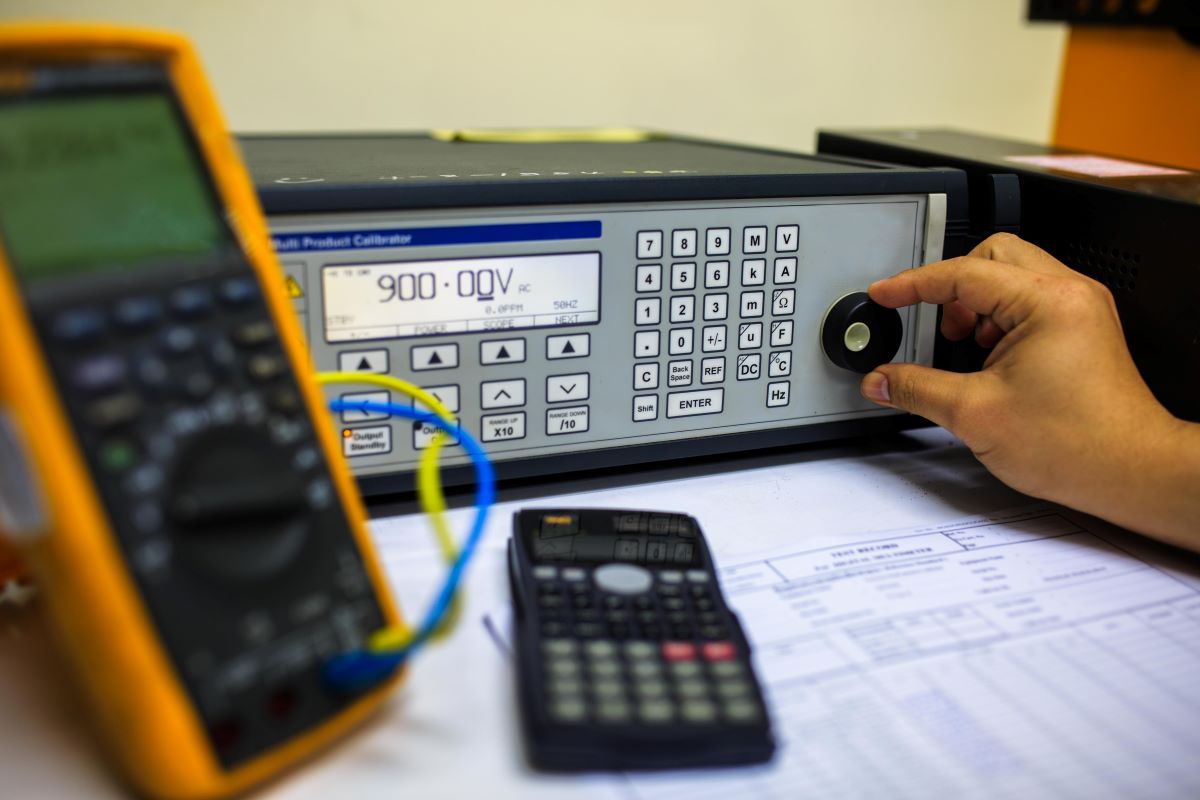
This underscores the importance of regular calibration for ensuring continued measurement accuracy. Calibration involves the instrument’s readings being compared against a known standard, so that adjustments can be made if necessary.
The exact frequency with which calibration should be carried out will depend on such factors as manufacturer recommendations, how often the tool is used, and the required accuracy levels. In the UK, many organisations use calibration services accredited by the United Kingdom Accreditation Service (UKAS).
- Store Equipment in the Correct Way
Users don’t always realise the extent to which improper storage can adversely affect the accuracy of measurement tools’ readings. A given instrument may be sensitive to moisture, dust, temperature fluctuations, magnetic interference, and/or physical shock.
Some of the steps you can take to protect measurement equipment might seem like “common sense”, but they aren’t always practised as routinely as they ought to be.
So, don’t overlook the importance of storing instruments in protective cases when they aren’t in use, and keeping them in clean and dry environments. Make sure, too, that you keep any given tool away from sunlight and excessive heat, in addition to removing batteries where appropriate if the instrument is set to be put into long-term storage.
- Maintain Your Instruments Properly
We addressed the importance of calibration above. However, there’s something else that can be very effective at preventing drift and extending accuracy between calibrations: looking after your measurement instruments well.
Regular cleaning will be a non-negotiable part of this, and can be as simple as using a soft, lint-free cloth to remove dust, grease, or debris. In the case of precision tools like micrometers and calipers, don’t forget to clean measuring faces (such as anvils and jaws) before and after use.
You should also routinely examine your measurement instruments for wear. Be sure to keep an eye out for damage, loose components, or battery issues. The lubrication of moving parts may also be appropriate, but if so, it is crucial to only do this in line with the manufacturer’s guidance.
- Use Proper Measurement Techniques
Human error is one of the primary contributors to inaccurate readings from measurement tools. This is why organisations should train their staff in correct procedures, including in relation to positioning the instrument correctly, using stable hand placement, and allowing sensors to settle before recording.
Certain steps are recommended for specific types of tools. For example, digital calipers or scales should always be zeroed prior to use, while it is important to verify analogue tools against a known standard.
Reading measurements accurately is also crucial. This includes taking care to view scales straight-on to avoid parallax errors, and in the case of digital displays, making sure the battery is fresh.
Final Thoughts: Simply Having the Right Equipment Isn’t Enough
While it is naturally important to have the highest possible standard of measurement instruments available to you, this won’t suffice on its own for giving you accurate readings. When it comes to achieving dependable and consistent results, such steps as proper calibration, storage, environmental control, and user training will all be vital.
Strong measurement practices like these will, in turn, go a long way to improving compliance, safety, efficiency, and all-round operational performance.