









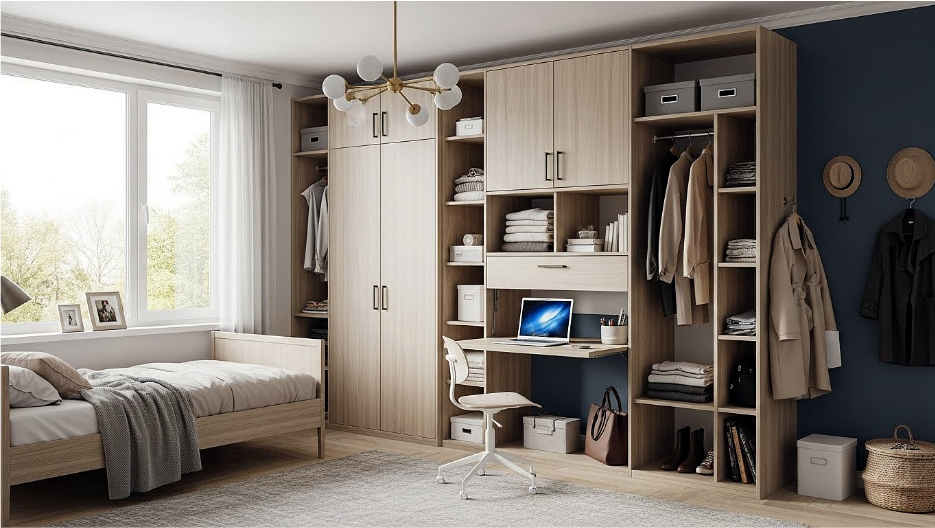
Small bedroom? It doesn’t have to feel cramped. In fact, with the right design choices and clever storage solutions, you can transform even the tiniest space into a cosy, welcoming retreat that feels surprisingly spacious.
The worst mistakes include bulky furniture that overwhelms the room, excessive clutter that creates visual chaos, and poorly chosen hanging light fixtures that not only eat into valuable vertical space but also make the ceiling feel lower than it is.
Let’s explore how to avoid these common mistakes and create a small bedroom that feels wonderfully spacious and inviting:
No storage built into your bed
One of the most significant oversights in small bedroom design is not taking advantage of bed storage solutions. Your bed takes up the most floor space in your bedroom, so why not make it work harder for you?
Beds with storage come in two flavours, each offering unique benefits for your space-saving needs:
- Drawers — typically available with two or four drawers, depending on the bed size. These practical storage solutions are brilliant for organising your linens, shoes, seasonal clothing, and those everyday bits and bobs that need a home. The drawers slide out smoothly, offering easy access without requiring you to lift the mattress.
- Ottoman beds — these clever designs transform the entire underside of the bed into a massive storage space. They’re brilliant for storing bulkier items like spare duvets, pillows, winter clothing, board games, books, and seasonal decorations. The gas-lift mechanism makes accessing your belongings effortless, and the storage space is typically three times larger than drawer options.
Buying a bed that’s too big
While the idea of sprawling out on a luxurious king-size bed might be tempting, cramming an oversized bed into a small bedroom is a classic mistake. Yes, you’ll have plenty of sleeping space, but if you have to push it against a wall or can’t maintain at least 45 cm of clearance around the sides, you’ll create an awkward, cramped atmosphere that makes the room feel even smaller.
Remember these essential dimensions when choosing your bed:
- Single – 90 x 190 cm (perfect for one person or children’s rooms)
- Small double – 120 x 190 cm (ideal for smaller spaces whilst still accommodating couples)
- Double – 135 x 190 cm (standard size for couples)
- King – 150 x 200 cm (luxurious space but requires a larger room)
It’s crucial to note that these measurements represent standard UK mattress sizes – NOT BED FRAME SIZES. Bed frames typically add 5-10 cm to each dimension, so you’ll need to measure up carefully to ensure a proper fit in your bedroom. For most small bedrooms, a small double bed offers the perfect compromise between comfort and space efficiency.
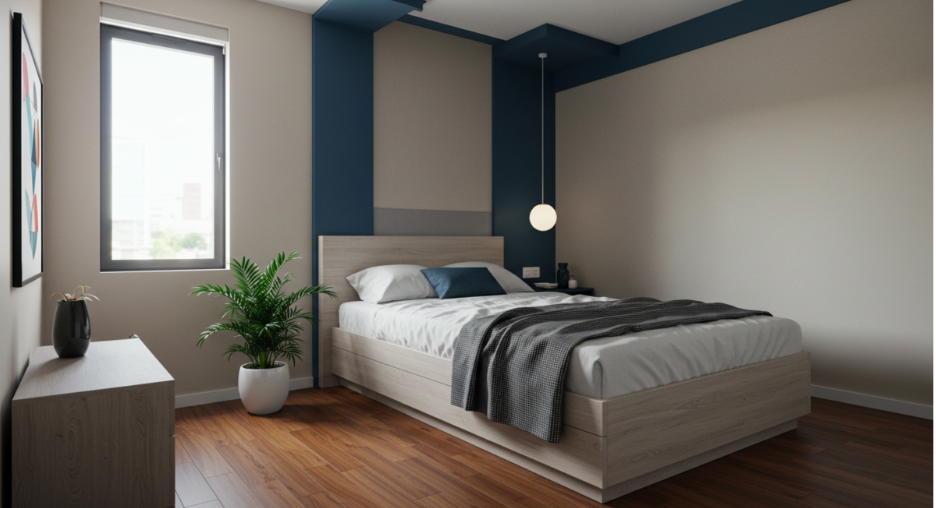
Pictured source Bedstar.
A small double bed and mattress measure 120cm wide and 190cm long in metric dimensions (that’s 4 feet wide and 6 feet 3 inches long in imperial measurements). Often referred to as a ‘Queen’ or ‘Three Quarter’ bed, this size strikes an excellent balance – wider than a single bed but more compact than a standard double, making it perfect for smaller spaces.
Oversized furniture
One of the most impactful changes you can make in a small bedroom is choosing appropriately scaled furniture. Often, simply selecting pieces that are 10-30cm slimmer and narrower can dramatically transform the feel of your space, creating better flow and making the room appear significantly larger.
Your wardrobe, chest of drawers, and dressing table are prime candidates for this slimming-down approach. The clever trick is to trade horizontal space for vertical space – you’ll maintain (or even increase) storage capacity while reducing the furniture’s footprint.
Consider this practical example: replacing a wide chest of four drawers with a tall, narrow chest of six drawers could increase your storage space while freeing up valuable floor area. This vertical approach not only maximises storage but also draws the eye upward, making your ceiling appear higher.
Single-use furniture
Building on the concept of smart furniture choices, multi-functional pieces are absolute game-changers in small bedrooms. Why have multiple pieces of furniture when one cleverly designed item can serve multiple purposes?
Instead of a separate chest of drawers, opt for a wardrobe with built-in drawer sections. Rather than squeezing in both a dressing table and storage unit, choose a dressing table with integrated drawers along the sides. These combination pieces not only save space but also create a more cohesive, uncluttered look.
For children’s bedrooms, high sleeper beds are particularly brilliant space-savers. These elevated bed frames can incorporate a desk, drawers, and even wardrobe space underneath, essentially creating a complete bedroom suite in the footprint of a single bed.
Not using the back of your door
The back of your bedroom door represents valuable but often overlooked storage real estate. This vertical space can be transformed into an incredibly useful storage zone with the right solutions. Over-door hooks, hanging organisers, or a properly mounted full-length mirror can maximise this space without impacting your room’s floor area or visual spaciousness.
Consider installing an over-door organiser with multiple pockets for shoes, accessories, or toiletries. Or mount a series of hooks at different heights to hang robes, bags, and accessories. If you’re concerned about aesthetics, choose slim-profile options in colours that complement your room’s decor – they’ll be practical without being visually intrusive.
Over-door storage pockets are a brilliant solution for organising your smaller personal items. These versatile organisers are perfect for storing jewellery collections, keeping accessories neatly arranged, organising your daily make-up essentials, storing grooming products within easy reach, and even accommodating heels and slippers. The beauty of these storage solutions lies in their ability to maximise vertical space whilst keeping your belongings easily accessible and dust-free.
For those who prefer a more structured approach, mesh basket over-door organisers offer a robust alternative. These are particularly fantastic for storing books, decorative trinkets, and various items that would otherwise clutter your desk space. The mesh design allows you to see contents at a glance, making it easier to locate items quickly whilst maintaining an organised appearance.
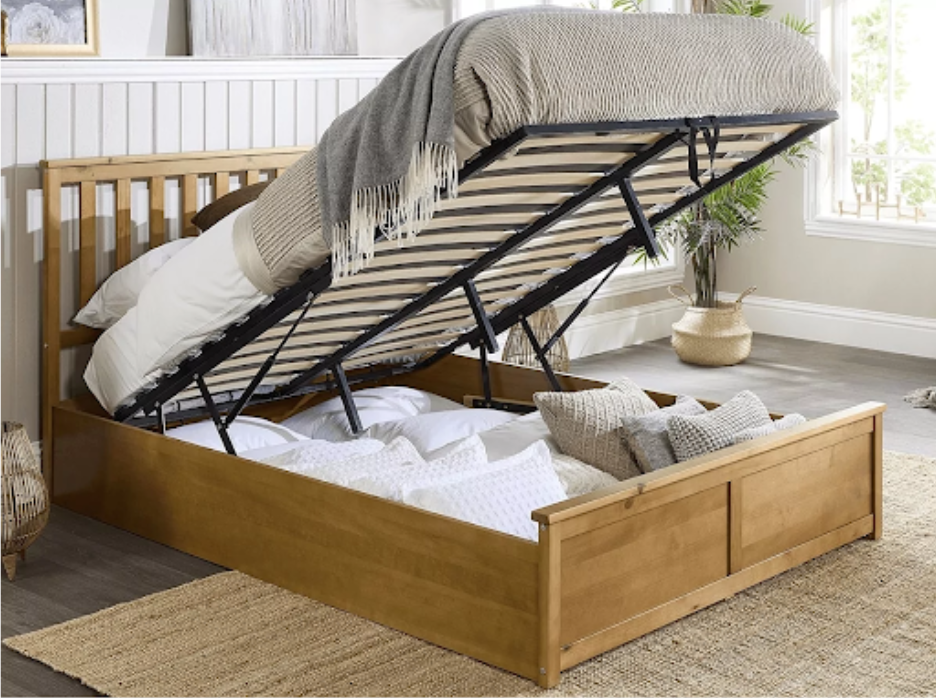
Image source Bedstar: Timberland 4FT Small Double Wooden Ottoman Bed – Natural. Priced £329.
Cluttered surfaces
When it comes to small bedrooms, cluttered surfaces are your biggest enemy. Whether you’re looking at your desk space, shelving units, windowsill, or the top of your wardrobe, allowing these areas to become dumping grounds for miscellaneous items will instantly make your bedroom feel more confined and chaotic. The visual noise created by cluttered surfaces draws attention to the room’s limitations rather than its potential.
To combat this common issue, invest in high-quality stackable plastic storage boxes. These practical solutions allow you to organise your belongings systematically whilst maintaining a clean, unified look. Better yet, consider upgrading to a storage bed (as discussed in point one above) to completely hide these items from view, creating a more serene environment.
Don’t underestimate the power of a thorough de-cluttering session. Take time to sort through your belongings, being honest about what you truly need and use. Items that no longer serve you can find new homes through local selling platforms or by sharing with family and friends who might appreciate them more.
Neglecting vertical space
Your bedroom’s vertical space offers tremendous potential for smart storage solutions. Installing tiered bookshelves creates organised zones for books and decorative items whilst drawing the eye upward, making your room feel taller. Mesh baskets mounted at various heights provide safe storage for cosmetics and delicate items that need protection from accidental falls. Consider adding task lighting at different levels to create functional zones for various activities.
When selecting shelving options, floating shelves are particularly effective for maintaining a minimal aesthetic. Opt for polycarbonate or clear acrylic versions – these seemingly invisible shelves create storage space without adding visual weight to your room, helping to maintain an open, spacious feel.
Bulky hanging light fixtures
In small bedrooms, every centimetre of vertical space counts, and bulky hanging light fixtures can significantly impact your room’s perceived height. Instead of traditional pendants, consider installing flush downlights for a sleek, modern look. If that’s too involved a project, opt for flush or semi-flush ceiling lights that sit close to the ceiling whilst still providing ample illumination.
Wall-mounted lights offer another clever alternative to traditional ceiling fixtures. Consider installing these beside your bed to replace conventional bedside table lamps, freeing up valuable surface space on your nightstands.
Heavy curtains
Traditional heavy curtains, whilst luxurious, can overwhelm a small bedroom and consume precious space. A more space-efficient solution is to install blackout blinds directly within your window recess. These provide excellent light control without the bulk of conventional curtains.
If you’re particularly fond of curtains, consider lightweight alternatives such as sheer or voile fabrics. These elegant options provide privacy whilst allowing natural light to filter through during daylight hours, creating an airy, spacious atmosphere. The flowing nature of these lighter fabrics adds movement and interest without dominating your room’s visual space.